

SINGLE-VINEYARD Chardonnay FROM Bowyer Ridge - ADELAIDE HILLS
BOWYER
.jpg)
LOT.1
CHARDONNAY
harvest 2025
The first release under the Bowyer label.

Shaped by the Ridge and the Ground Beneath It
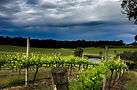
Bowyer Ridge sits on a north-facing slope at around 500 metres elevation in the Kenton Valley, Adelaide Hills. The site combines deep red loam over fractured mica schist and scattered ironstone - a complex soil profile that balances warmth, drainage and mineral composition.
Cool nights and mild days extend the ripening window, allowing Chardonnay fruit to develop concentration while maintaining natural acidity.
The surrounding eucalyptus woodland supports biodiversity, moderates wind exposure and contributes to the microclimate that defines the vineyard’s balance.
For many years, Bowyer Ridge fruit has been supplied to leading Adelaide Hills producers, appearing in some of the region’s most highly regarded Chardonnays.
Under the Bowyer label, we now bottle that same fruit ourselves - an honest expression of a single site and the conditions that shape it. The focus remains on clarity, precision and texture: Chardonnay defined by its elevation, geology and restraint.

LOT.1
CHARDONNAY
harvest 2025
The first release under the Bowyer label.
Hand-picked fruit, whole-bunch pressed, and fermented in French oak.
A precise, mineral-driven Chardonnay that reflects the ridge’s UNIQUE GEOLOGICAL PROFILE.
“A cool site retaining acidity and balance, leading to elegant but powerful wine. Among the best vineyards for Chardonnay in the Adelaide Hills.”
Pare Wine Company

WHAT MAKES BOWYER WINE UNIQUE
THE SOILS OF BOWYER RIDGE VINEYARD
RED LOAM
The upper profile is a deep red clay-loam - well-drained, high in iron and organic matter. It provides warmth during the growing season and encourages consistent vine growth and balanced canopy development.

MICA SCHIST
Below the loam lies a layer of fractured mica schist — a metamorphic rock rich in silicate minerals. It fractures easily, promoting drainage and fine root penetration. This geological base contributes to the wine’s mineral line and subtle flint character.

IRONSTONE
Scattered ironstone fragments within the soil add trace elements and influence both heat retention and microbial activity. These pockets of iron-rich rock contribute to subtle savoury tones and fine structural grip in the finished wine.


WE Acknowledge the Land We Grow Upon
Connection to Country